Engine Swap Weight: Why Your 400hp Build Corners Like a Truck
Content Angle: Reveal how weight distribution changes from engine swaps create hidden performance losses that most enthusiasts miss and why pre-swap diagnostics prevent expensive mistakes
Challenges common swap assumptions while positioning comprehensive diagnostics as essential for successful builds
That 2JZ swap might make 400hp, but it just killed your 50/50 weight distribution. 📊 Most builders chase power numbers while ignoring how 200+ extra pounds over the front wheels destroys cornering balance.
Here's the brutal truth about engine swaps: that extra 200 pounds from your LS or 2JZ doesn't just sit there — it completely rewrites your car's physics. We're seeing builds lose 15-20% cornering performance despite gaining 150hp. What matters more to you: dyno bragging rights or actual track times?
Why Your Engine Swap Killed Your Car's Handling (Weight Data)
Engine swaps aren't just about horsepower. We analyze real weight distribution data from popular swaps and reveal why pre-swap diagnostics save thousands in chassis modifications. The numbers might surprise you.
POV: Your 2JZ swap made 400hp but ruined your 50/50 weight distribution 📉 #EngineSwap #WeightDistribution #Tuning #PerformanceData #CarMod
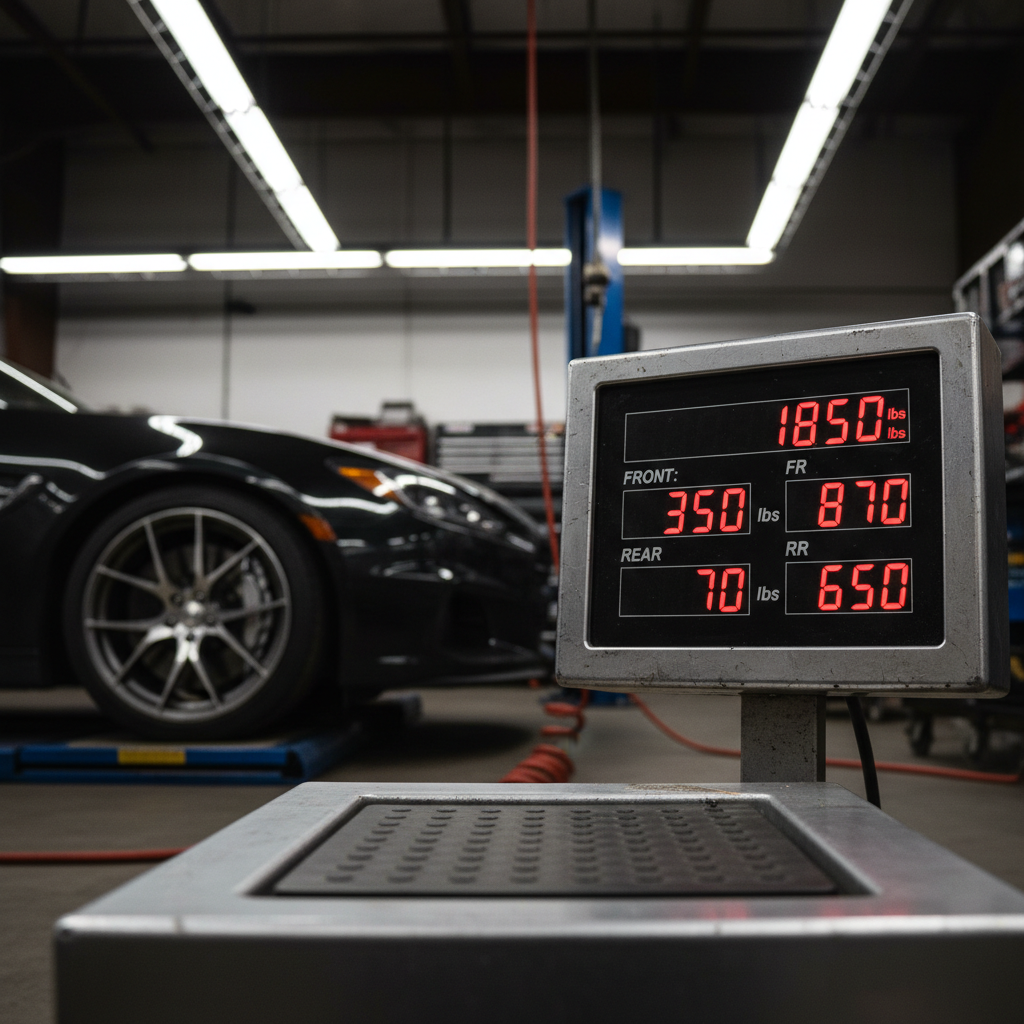
Engine Swap Weight: Why Your 400hp Build Corners Like a Truck
/engine-swap-weight-distribution-performance-handling
That 2JZ swap delivers 400hp but adds 200 pounds over the front axle, killing your car's cornering balance. Here's why weight distribution matters more than peak power for real-world performance.
You've seen the dyno sheets. The Instagram posts. The quarter-mile times. Everyone's obsessing over that magical 400hp number from their engine swap, but here's what nobody talks about: that extra 200 pounds hanging over the front wheels just turned your balanced sports car into an understeering pig. While you're celebrating peak power figures, your lap times are getting slower.
Weight Distribution: The Performance Factor Nobody Calculates
Most enthusiasts treat engine swaps like a simple power equation: bigger engine equals faster car. But weight distribution affects every aspect of performance from braking distances to cornering limits. A stock S13 240SX sits at roughly 57/43 front-to-rear weight distribution with its lightweight SR20DET. Swap in a cast-iron LS1, and you're looking at 62/38 or worse.
That 5% shift might seem minor, but it fundamentally changes how your car behaves. The front tires now carry more load during cornering, while the rear loses grip authority. Your suspension geometry, designed around the original weight distribution, is now working outside its optimal window.
What the Data Actually Shows
Real-world weight measurements reveal the true cost of popular swaps:
- SR20DET to LS1 (S-chassis): +180-220 pounds, shifts distribution from 57/43 to 62/38
- 4G63 to 2JZ (Eclipse): +150-180 pounds, typically moves from 59/41 to 63/37
- EJ25 to LS3 (BRZ): +200-240 pounds, destroys the car's famous 53/47 balance
But here's where it gets interesting: corner weights tell a different story than simple front/rear ratios. A proper corner weight analysis reveals diagonal imbalances that create handling quirks you'll never feel on a dyno. That new engine might sit 2 inches further forward than stock, creating a weight bias toward the left-front corner that makes the car loose on right-hand turns but tight on lefts.
Professional race teams target cross-weight percentages within 0.5% for optimal handling. Most engine swaps create 3-5% imbalances that require extensive chassis work to correct.
What to Watch Out For
The handling changes aren't just academic - they create real safety and performance issues:
- Braking performance suffers: More weight over the front wheels increases nose-dive, reducing rear brake effectiveness and extending stopping distances
- Tire wear becomes uneven: Front tires now work harder in corners, wearing faster and requiring more frequent alignment corrections
- Suspension components fail prematurely: Front springs, struts, and bushings face higher loads they weren't designed to handle
- Steering feel deteriorates: Increased front weight creates more kickback through the steering wheel and reduces feedback quality
Most builders discover these issues after the swap is complete, when relocating the engine or adding ballast becomes extremely expensive. A 2JZ that sits 4 inches further forward than the original 4G63 can't simply be moved backward without major firewall modifications.
TorqueMetrics Take
This is where comprehensive diagnostics become essential. TorqueMetrics doesn't just analyze your engine's performance data - our platform helps you understand the complete vehicle dynamics picture.
Power is useless if you can't put it down effectively. Before you commit to that dream engine swap, understand what you're really changing about your car's fundamental character. Try TorqueMetrics to see how your modifications affect the complete performance picture, not just the dyno numbers.